
Over the past few years, THCA hemp changed the direction of the entire industry.
Growers who once focused on CBD and CBG production shifted heavily into THCA, driven by stronger margins, faster sales, and growing demand from retail markets.
But that phase is now facing serious pressure.
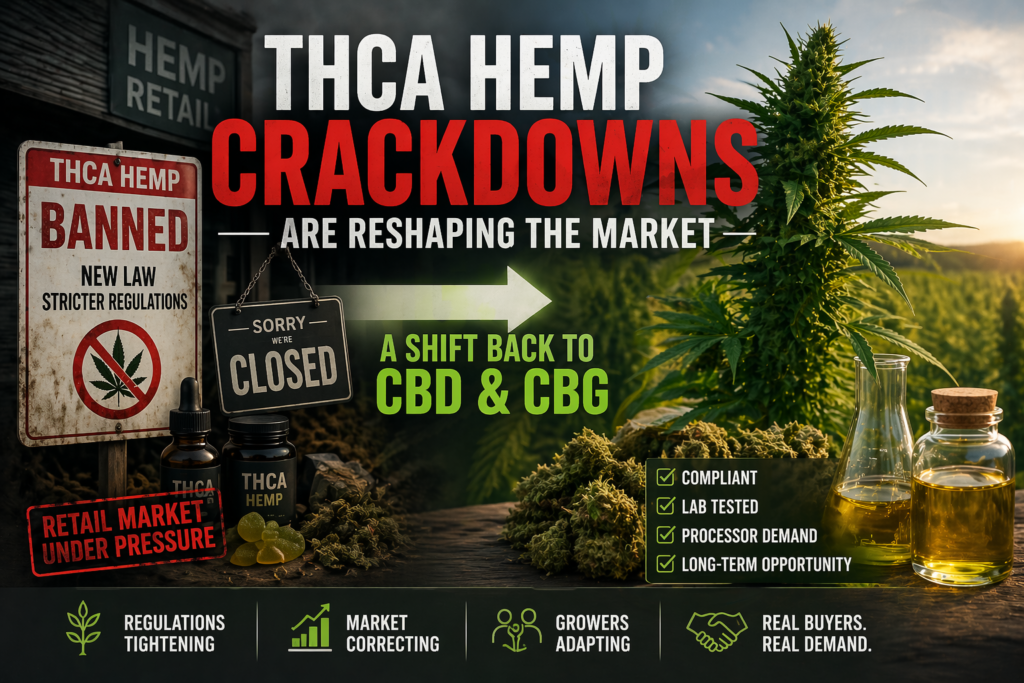
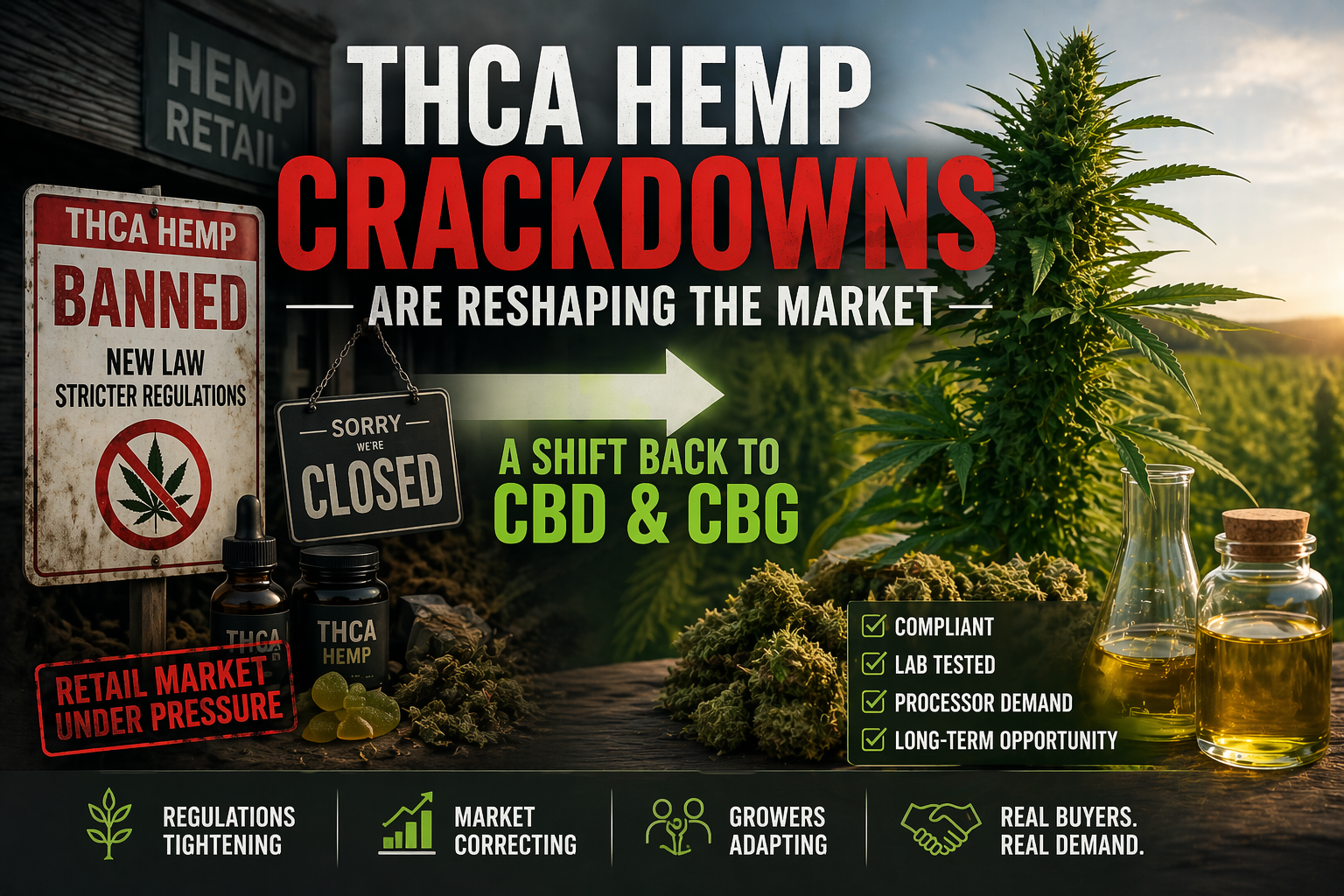
Across multiple states, new laws and enforcement actions are targeting intoxicating hemp products, forcing retailers to shut down or move into stricter regulatory frameworks.
A recent example comes from Missouri, where new legislation has led to hemp retailers closing their doors as product rules tighten.
This is not an isolated case. It’s part of a broader shift that is starting to reshape the hemp market.
Why Growers Moved Away From CBD and CBG
To understand what’s happening now, it’s important to look at what led to the THCA boom.
Traditional hemp markets—especially CBD biomass—faced major challenges:
- falling prices
- oversupply
- inconsistent buyer demand
At the same time, THCA opened a new lane:
- higher per-pound value
- strong retail demand
- easier short-term sales
Naturally, growers followed the opportunity.
Many farms that originally produced CBD or CBG shifted acreage toward THCA to stay profitable.
The Crackdown on Intoxicating Hemp
That same segment is now being restricted.
States are beginning to:
- redefine hemp-derived THC limits
- restrict or ban intoxicating hemp products
- push sales into licensed marijuana systems
This regulatory tightening is forcing many THCA-focused businesses to shut down or restructure.
As highlighted in multiple reports, retailers relying on THCA products are being squeezed out as laws change and enforcement increases.
This is the risk of building around a regulatory gray area.
A Market Correction Is Underway
What we’re seeing now is not a collapse—it’s a correction.
The THCA wave pulled the market in one direction.
Now regulation is pushing it back toward:
- compliant hemp
- federally aligned products
- structured supply chains
And this time, the market is not going back to the old CBD model.
It’s evolving into something more organized.
Where CBD and CBG Demand Is Actually Growing
If you’re searching for CBD biomass buyers, the demand is still there—but it has shifted.
The next wave of buyers is not retail.
It’s coming from:
- extractors
- processors
- formulation companies
These are the businesses producing:
- CBD oils
- capsules
- wellness products
- medical-grade formulations
Industry coverage from Cannabis Bussiness Times continues to highlight growth in processing and manufacturing over raw retail sales.
These buyers don’t operate on hype. They build supply chains.
What Buyers Are Looking For Now
As the market matures, expectations are changing.
Today’s CBD and CBG buyers are focused on:
- consistent cannabinoid content
- compliant THC levels (≤0.3%)
- verified COAs (Certificates of Analysis)
- reliable, repeat supply
Federal guidelines around hemp compliance can be found through:
👉 https://www.ams.usda.gov/rules-regulations/hemp
This shift means growers need to think differently.
It’s no longer about selling product once. It’s about becoming part of a supply chain.
The Role of Structured and Medical Demand
At the same time retail hemp is being restricted, structured demand is beginning to emerge.
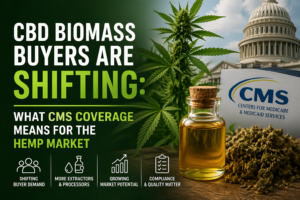
The Centers for Medicare & Medicaid Services has introduced a pilot program allowing certain Medicare patients to access hemp-derived CBD products under clinical supervision.
More details here:
👉https://okclonecompany.com/blog/cbd-biomass-buyers-hemp-market-2026/
This is significant because it represents a shift toward:
- standardized products
- controlled distribution
- medical integration
Healthcare-focused analysis also points to growing interest in cannabinoid-based treatments.
This type of demand builds differently. It is slower—but more stable.
From Retail Hype to Supply Chain Stability
The hemp industry is moving through a transition:
Past phase:
- retail-driven demand
- THCA growth
- fast-moving sales
Current phase:
- regulatory pressure
- retail contraction
- market uncertainty
Next phase:
- processor-driven demand
- structured supply chains
- long-term contracts
This is how industries mature.
What This Means for Growers in 2026
For growers, the strategy needs to evolve.
Instead of chasing short-term retail demand, the focus is shifting toward:
- producing compliant CBD and CBG biomass
- maintaining consistent quality
- building relationships with extractors and processors
- thinking in terms of long-term supply
The growers who adjust early will be in a stronger position as the market stabilizes.
A Reset, Not the End of the Market
It’s easy to look at THCA crackdowns and assume the market is shrinking.
But what’s actually happening is a reset.
- the shortcut is being removed
- the structure is being built
- the market is becoming more defined
This is where stability comes from.
The Future of Hemp Demand
The direction is becoming clearer:
- less reliance on unregulated retail
- more demand from processors and manufacturers
- increasing importance of compliance and consistency
The opportunity hasn’t disappeared. It has shifted.
Looking for CBD/CBG Biomass or Clones?
We work directly with growers and supply compliant, lab-tested CBD and CBG clones and biomass ready for processing.
If you’re sourcing consistent material, reach out and let’s talk.